Lauren in our text measurement group is getting a library studies degree and has been feeding the rest of us some really interesting information. Here's a USA Today article on book-banning efforts around the country. It has a great sortable table at the bottom of the article that is really worth checking out -- it contains the reasons that requests have been made to ban a book, as well as the eventual decision that librarians and educators made about the book.
Here are the top ten most frequently challenged books, and their Lexile measures:
And Tango Makes Three by Justin Richardson and Peter Parnell: AD720L
The Chocolate War by Robert Cormier: 820L
Olive's Ocean by Kevin Henkes: 680L
The Golden Compass by Philip Pullman: 930L
The Adventures of Huckleberry Finn by Mark Twain: 990L
The Color Purple by Alice Walker: NC670L
TTYL by Lauren Myracle: NP
I Know Why the Caged Bird Sings by Maya Angelou: 1070L
It's Perfectly Normal by Robie Harris: no measure
The Perks of Being A Wallflower by Stephen Chbosky: 720L
-- posted by Chris Vitiello, School-Based Initiatives
October 26, 2008


October 10, 2008

October 2, 2008
What reading levels are for
This week, the Los Angeles Times ran an interesting opinion piece, "Reading shouldn't be a numbers game," by Regina Powers, an Orange County public librarian and former teacher. She expresses frustration with the misapplication of reading programs in schools, particularly in the extrinsic motivations they attach to reading, like quiz points. She also asserts that children are best served by simply reading about what they're interested in. Here's her lead:
If you want to grow readers, it's imperative that you help connect them with books they want to read. How you help them is the key. Here is our response to Mrs. Powers' piece, which the newspaper unfortunately did not print:
School has started. I can tell because frazzled parents drag their embarrassed children up to the reference desk at my library to ask, "Where are the fifth-grade books? We need a 5.6 level that's worth at least 7 points."Amen, sister. Any reading program that forces a random book into a young person's hand -- or, worse yet, takes a book out of a young person's hand -- is basically a crime against humanity. We should discuss their shortcomings in The Hague.
I avoid frustrating both parties with an explanation of how the Dewey decimal system works, and ask the child, "What do you like to read?" The response from both adult and child is all too often a blank expression.
If you want to grow readers, it's imperative that you help connect them with books they want to read. How you help them is the key. Here is our response to Mrs. Powers' piece, which the newspaper unfortunately did not print:
Reading levels matter
Regina Powers ("Reading shouldn't be a numbers game," Sept. 30) is absolutely right that the best way to raise passionate readers is to allow them to choose books in which they are interested.
However, matching a child's reading ability to an appropriate level of text difficulty is another critical piece of the literacy puzzle. Often a child - especially a struggling or reluctant reader - will disengage from a book that's too difficult. Likewise, a book that's too easy doesn't expose a child to the new vocabulary and sentence structures crucial to reading growth.
Studies by Dr. James S. Kim while at the University of California at Irvine support the benefits of leveled, high-interest reading. In a summer reading intervention program, students who read whatever they wanted didn't show gains, while those who combined interest with reading level did.
In fact, based on this research, parents and children can go to the free "Find a Book with Lexiles" site to search tens of thousands of books in their areas of interest and California Reading List level. New and current books are added all the time. The site even lets you look up books in your local public library.
Increasingly, librarians are taking the opportunity to build a strong school-home connection by listing book measures in their catalogs. Arm a librarian with a student's California Reading List number and personal interests, and that child walks out of the library with a backpack full of books that will challenge him as he enjoys them.
Children should read what they want to read, and book levels can help keep them reading and growing.
September 22, 2008
Need High-Low books with Lexile measures?
One of the great uses of Lexile measures is to help connect struggling and reluctant readers to books they are able to read. But let's be realistic here -- these readers have to want to read the books as well. It's a challenge to find easy-to-read books that are also relevant to an older student's life. Fortunately, authors and publishers are responding to this need. Librarians, too -- did your public library have such a large "young adult" section 5 years ago? Mine grew from a shelf to a room in that span, with a devoted staff member.
These books are called "high-low" books -- high-interest plus low-readability. The idea is that if you have a 10th grader who is reading at 550L (and chances are overwhelming that you do), you're not going to hand him Magic School Bus books. He's practically old enough to drive a school bus. The cartooney cover image will turn him off and he won't likely connect with the content either. High-low books stand a much better chance that he'll give them a chance and start turning the pages.
Despite their short sentences and basic vocabulary, high-low books deal with teen and adult issues and life situations. The young adult characters in high-low suspense stories find dead bodies in the lake or avenge a murdered brother, rather than investigate a stolen teddy bear or stand up to a lunchroom bully. And they sometimes use four-letter words other than "gosh" and "darn," by the way.
Several publishers that we work with specialize in high-low books or have an imprint devoted solely to them. Do your homework on these books before recommending them to your particular students. Read the summary and some reviews. Also, the publishers sometimes let you see a few preview pages on their sites.
Perfection Learning has several series of fiction chapter books in the 600L and 700L zones. The main characters are high-schoolers. "Passages to History" gives compelling stories set during historical periods such as the Civil Rights Era and the Great Depression. Lots of opportunities to make connections to social studies lessons! "Passages to Adventure" and "Passages to Suspense" contain gripping fiction stories with intense situations. If these were television shows, they'd be on after 9pm. Over 700 Perfection Learning books have Lexile measures, the majority of which are between 300L and 800L.
Don Johnston, Inc. specializes in rewriting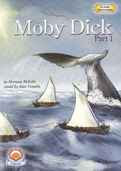 great works to lower readability levels and word counts. Over 100 Don Johnston books have Lexile measures, the majority of which are between 400L and 800L. Series such as "Classic Literature," "Famous Short Stories," and "Myths and Legends" are part of their Start-to-Finish Library reading product, which features texts in several different media formats. Robert Louis Stevenson's "Dr. Jekyll and Mr. Hyde," for instance, is rewritten at well over 300L below the original.
Coughlan Companies / Capstone Publishers has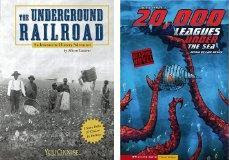 several imprints with great high-low books as well as genres catering to reluctant readers:
Orca Book Publishers has two high-low imprints. Orca Soundings (25 measured titles) is for high school students, and Orca Currents (6 measured titles) is for middle schoolers, all written at upper elementary school levels. These imprints have been particularly lauded by teen readers for their authenticity -- the characters talk like people really talk. Librarians have also praised these books. They are conspicuous on the shelves of the young adult area in my local public library, and the young adult librarian called them "addictive." Circulation demands that she buy two or more copies of each Orca book.
-- posted by Chris Vitiello, School-Based Initiatives
These books are called "high-low" books -- high-interest plus low-readability. The idea is that if you have a 10th grader who is reading at 550L (and chances are overwhelming that you do), you're not going to hand him Magic School Bus books. He's practically old enough to drive a school bus. The cartooney cover image will turn him off and he won't likely connect with the content either. High-low books stand a much better chance that he'll give them a chance and start turning the pages.
Despite their short sentences and basic vocabulary, high-low books deal with teen and adult issues and life situations. The young adult characters in high-low suspense stories find dead bodies in the lake or avenge a murdered brother, rather than investigate a stolen teddy bear or stand up to a lunchroom bully. And they sometimes use four-letter words other than "gosh" and "darn," by the way.
Several publishers that we work with specialize in high-low books or have an imprint devoted solely to them. Do your homework on these books before recommending them to your particular students. Read the summary and some reviews. Also, the publishers sometimes let you see a few preview pages on their sites.
Perfection Learning has several series of fiction chapter books in the
 600L and 700L zones. The main characters are high-schoolers. "Passages to History" gives compelling stories set during historical periods such as the Civil Rights Era and the Great Depression. Lots of opportunities to make connections to social studies lessons! "Passages to Adventure" and "Passages to Suspense" contain gripping fiction stories with intense situations. If these were television shows, they'd be on after 9pm. Over 700 Perfection Learning books have Lexile measures, the majority of which are between 300L and 800L.
Don Johnston, Inc. specializes in rewriting
 great works to lower readability levels and word counts. Over 100 Don Johnston books have Lexile measures, the majority of which are between 400L and 800L. Series such as "Classic Literature," "Famous Short Stories," and "Myths and Legends" are part of their Start-to-Finish Library reading product, which features texts in several different media formats. Robert Louis Stevenson's "Dr. Jekyll and Mr. Hyde," for instance, is rewritten at well over 300L below the original.
Coughlan Companies / Capstone Publishers has
 several imprints with great high-low books as well as genres catering to reluctant readers:
- Capstone Press
- Keystone Books
- Stone Arch Books
- Picture Window Books
- Compass Point Books
Orca Book Publishers has two high-low imprints.
 Orca Soundings (25 measured titles) is for high school students, and Orca Currents (6 measured titles) is for middle schoolers, all written at upper elementary school levels. These imprints have been particularly lauded by teen readers for their authenticity -- the characters talk like people really talk. Librarians have also praised these books. They are conspicuous on the shelves of the young adult area in my local public library, and the young adult librarian called them "addictive." Circulation demands that she buy two or more copies of each Orca book.
-- posted by Chris Vitiello, School-Based Initiatives
September 18, 2008
Welcome, teachers!
This Lexile blog is just for you.
Watch this space for ideas about using The Lexile Framework for Reading in the classroom.
If you use Lexile in your classroom and want to share your ideas here, then just ask to become a guest blogger. It's easy!
Watch this space for ideas about using The Lexile Framework for Reading in the classroom.
If you use Lexile in your classroom and want to share your ideas here, then just ask to become a guest blogger. It's easy!
Subscribe to:
Posts (Atom)

 Posts

